

The Road America 500
Endurance Racing Comes Early to Road America
Part of the History of Road America
Online Exhibit
Origins
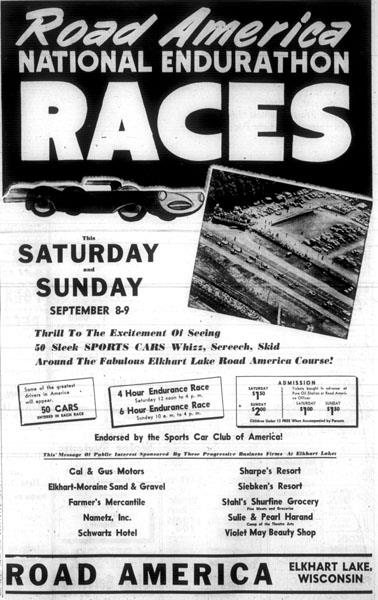
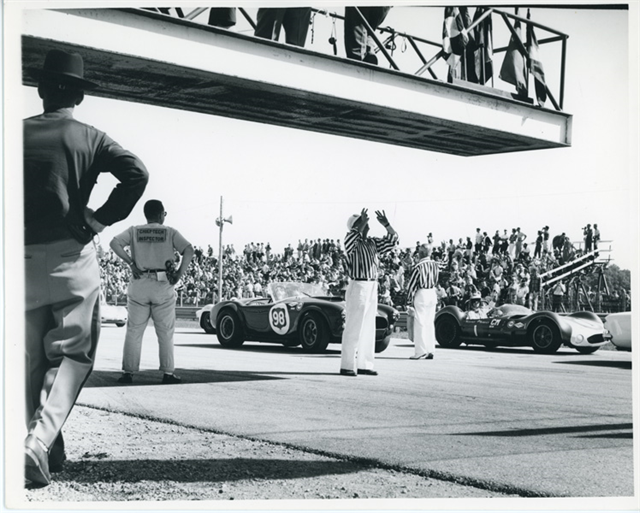
The prestigious Road America 500 was one of the track’s first premier races and attracted top teams and drivers from across the country. The RA500 evolved from the 1956 Endurathon, Road America’s first foray into endurance racing. That weekend event featured a 300-mile support race for smaller cars (won by Carroll Shelby in Jim Kimberly’s Osca MT-4) and a six-hour timed endurance race on Sunday that required two drivers per car. Publicity compared the new endurance race to 24 Hours of Le Mans.
The Endurathon was a huge sucess. The feature six-hour race was won by John Kilbourn and Howard Hively. They completed 484 miles in their Ferrari 375 MM, beating second place John Fitch and Briggs Cunningham driving a D-Type Jaguar by only 6 seconds!
A Distance Race!
Clif Tufte astutely realized that if the winning cars had just made four more laps, they would have travelled 500 miles. So, Tufte decided that future events would be that distance. Consequently, beginning in 1957, the event was promoted as Road America 500, “the first 500-mile race in the history of sports car racing.” The Road America 500 was born!
Original RA500
Between 1957 and 1962, the Road America 500 was a prominent race in the National Sports Car Championship, an amateur series run by the SCCA. By the early 1960’s, however, the cost of racing cars, transportation, and hiring top drivers required many teams to become professional to pay the teams’ bills. In 1963, the Road America 500 became part of SCCA’s first professional race series, the United States Road Racing Championship (USRRC).
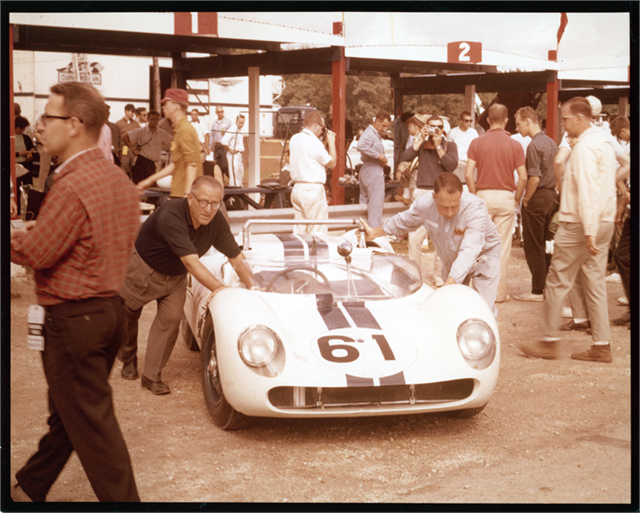
The Road America 500 attracted the country’s top cars and drivers. In 1961, Briggs Cunningham brought the Masterati Tipo 63 to compete in the Road America 500. The car was the first serious mid-engine V-12 sports car. It had enormous performance potential but was prone to mechanical failures. However, Walt Hansgen and Augie Pabst drove the car to victory, marking the 1961 Road America 500 as one of the car’s few major wins.
Small Engine Advantage
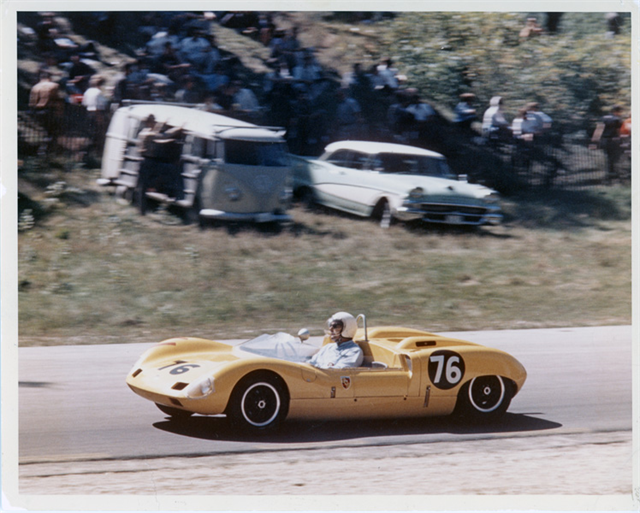
Augie Pabst got some unexpected driving time during the 1963 Road America 500. On lap 84 Bill Wuesthoff unexpectedly signaled for a relief driver. Pabst just happened to be standing in the pits at the time and hopped in. The switch placed Pabst behind the wheel of a new and unfamiliar car. While acclimating to the car, Pabst accidently spun out at Turn five. He told the Sheboygan Press, “When I looped it at 5, my first thought was – let’s get out…” But Pabst chose to stay in the race. He realizied larger cars such as the GT Cobras had to stop more often for fuel. Pabst surmised the smaller engined Elva-Porsche had an advantage. Pabst maintained the car at a steady pace, gaining in position as larger counterparts stopped to refuel. Pabst ended up winning the race. The car was the first and only 2-liter and under car to win the Road America 500.
Ferrari First Comes to Road America
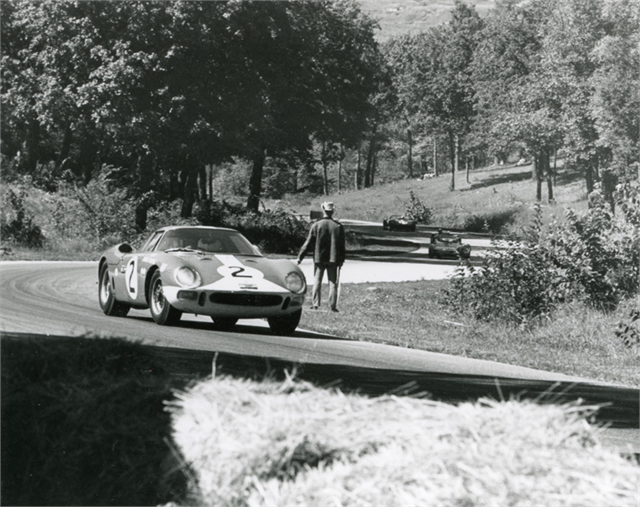
Many cars that compete have an interesting backstory; this is one that came directly from Italy. In 1964, Pabst and Hansgen, drivers for the Mecom Racing Team, first encountered a Ferarri 250 LM while on a personal tour of the Ferrari Factory. Pabst later described the event to Tim Kemmis for the Ferrari Club of America’s magazine, Prancing Horse: “…When we got to the Racing Department, there sat this beautiful little red coupe – a 250 LM. Walt and I went over to check it out while John [Mecom], Enzo, and his interpreter talked. Then John called to us, ‘Mr. Ferrari wants to know if you can win the RA 500 in this car?’ Walt looked at me and said, ‘What do you think, Mate?’ I said, ‘Sure we can win the 500 with this car.’” Mecom bought the car on the spot, and it was immediately loaded on a plane and flown to Milwaukee. Pabst picked it up at the Milwaukee airport and drove it directly to Elkhart Lake shortly before the race, where the number, racing stripes, and decals were added. Not only did the car win the Road America 500, but also set a new track record with an average speed of 87.660 MPH!
Endurance Racing Legacy
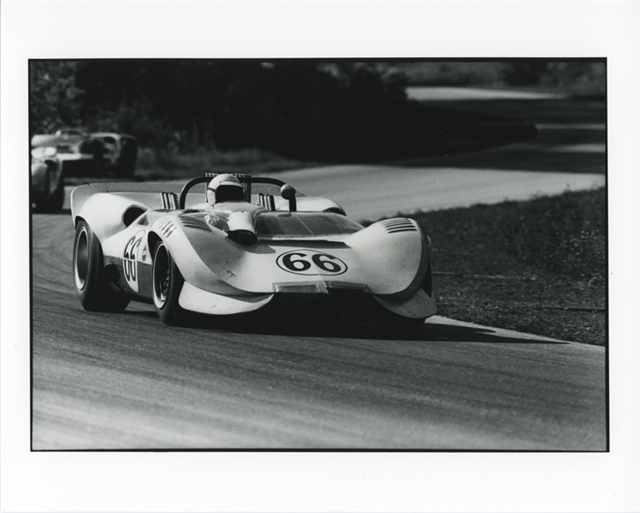
By the late 1960s, interest in endurance racing declined as exciting new series such as the Can-Am, Trans-Am, and F5000 grabbed the attention of fans and drivers. The Road America 500 stayed on the USRRC schedule through 1968. While Clif Tufte was a fan of endurance racing and the Road America 500, changes in the motorsport world forced a change. In 1969, the race was replaced with what would become the F5000 Series.
Although the original Road America 500 had ended, the tradition of endurance racing at Road America carried on.
Resurrections of an Iconic Race
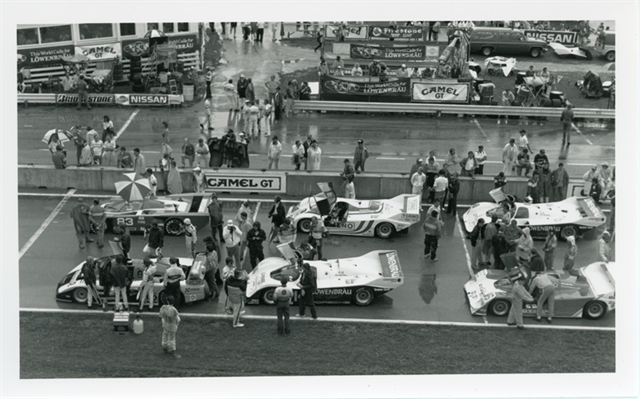
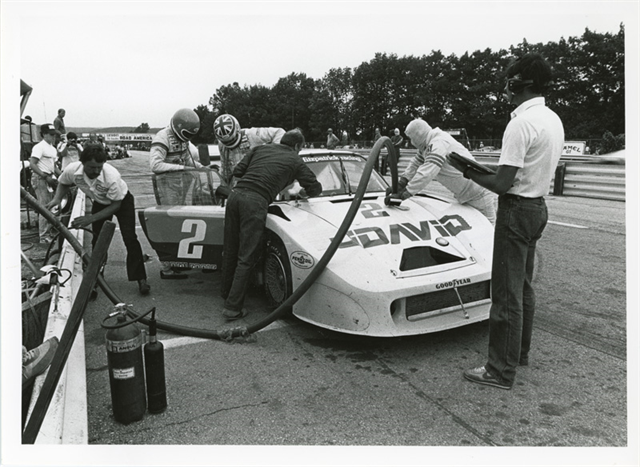
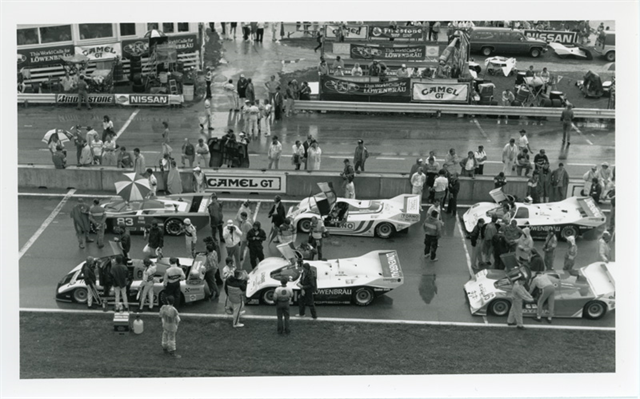
Endurance racing returned to Road America with the IMSA Camel GT Championship in 1979. The IMSA Camel GT Championship attracted the latest and fastest endurance racers, including cars seen at Le Mans and other world-wide endurance races. Augie Pabst, himself three-time Road America 500 winner, announced the 500-mile race would return to Road America. It would be known as the Pabst 500. Aligned with IMSA, the event included a full lineup of support races that provided weekend long entertainment. The IMSA Camel GT Championship continued at Road America through 1993.
Endurance Racing Returns Again
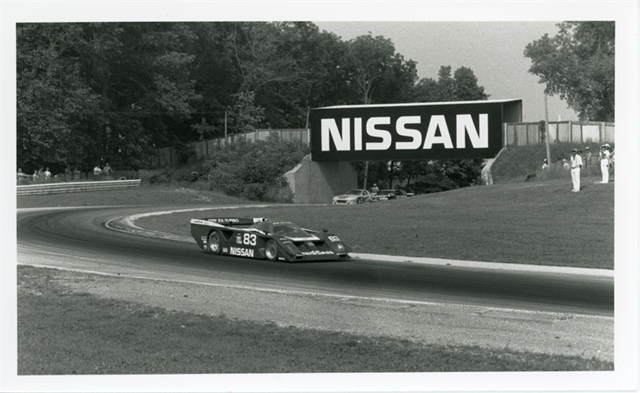
Endurance racing returned yet again to Road America with the Grand American Road Racing Championship in 2000 and 2001. In 2002, the race became part of the American Le Mans Series.
Since 2002, due to demands of live television, the race has been timed, generally running about 2 hours and 40 minutes. The series merged to become the Tudor United Sportscar Championship in 2014, which has since become known as the IMSA WeatherTech SportsCar Championship in 2015. The total distance traveled is usually around 500 kilometers, so, fittingly, the spirit of the Road America 500 lives on.
Sources:
- Interview with Road America staff Tim Kemmis, John Ewert, Spring 2023
- Schultz, Tom. Road America: Five Decades of Racing at Elkhart Lake. Indianapolis, IN: Beeman Jorgensen Inc., 1999
- Schultz, Tom. Celebrating 50 Years of Road Racing. Elkhart Lake, WI: Road America, 2004
- “David-Goliath Race Drivers Team Up For Endurathon.” Sheboygan Press, September 1, 1956
- “Road America National Endurathon Races.” Sheboygan Press, September 7, 1956
- “Road Races Underway at Elkhart.” Sheboygan Press, September 8, 1956
- Pelkin, Dwight. “Ferrari Beats Out Jaguars Again In Road America Endurance Race.” Sheboygan Press, September 10, 1956
- “Nation’s First 500-Miler For Sports Cars Sept. 8.” Sheboygan Press, August 19, 1957
- “Luminaries Of International Racing World Set For 2-Day Speed Classic.” Sheboygan Press, August 28, 1957
- Pelkin, Dwight. “Wuesthoff, Pabst ‘500’ Winners.” Sheboygan Press, September 9, 1963
- Kemmis, Tim. “Ferraris In Racing.” The Prancing Horse, No. 180, 2011
- “Elkhart Going 500-Mile Route.” Janesville Gazette, June 15, 1979.
- Road America website.