



Golden Era of the Trans-Am
Part of the History of Road America
Online Exhibit
Pony Cars Driven by the Best Drivers in America
The Trans-Am series is the longest continuously running professional race series at Road America. In the beginning, the series featured cars anyone could buy, driven by the best race drivers in America. Over the years, there have been significant changes to cars, but the spirit of high-performance sports cars lives on.
Origins of the Trans-Am
The Trans-Am series was founded by the Sports Car Club of America (SCCA) at the dawn of the pony car era in 1966 when potent performance sports coupes and sports sedans such as the Ford Mustang, Plymouth Barracuda, Chevrolet Camaro, Pontiac Firebird, and AMC Javelin came to market. It just made sense to race them! So, John Bishop, SCCA president, organized a manufacturer’s championship for the new cars, and the Trans-Am quickly became one of the country’s most popular race series.
There were rumors of the Trans-Am coming to Road America in 1967. But Road America President Clif Tufte was firmly committed to the Road America 500, despite encouragement to add the Trans-Am. When the Formula 5000 series replaced Road America 500 in 1969, it quickly became apparent the event should be paired with another race. Before the weekend was over, Road America had all but committed to a combined F5000/Trans-Am race weekend for 1970.
Starting at the Zenith
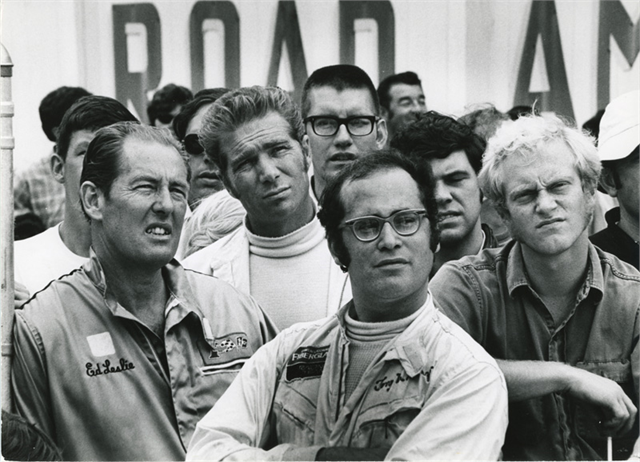
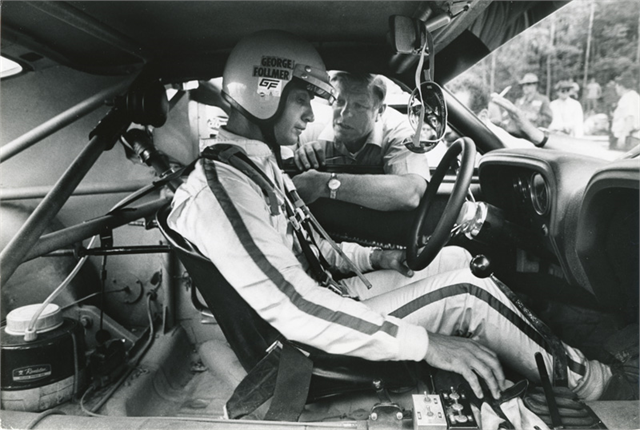
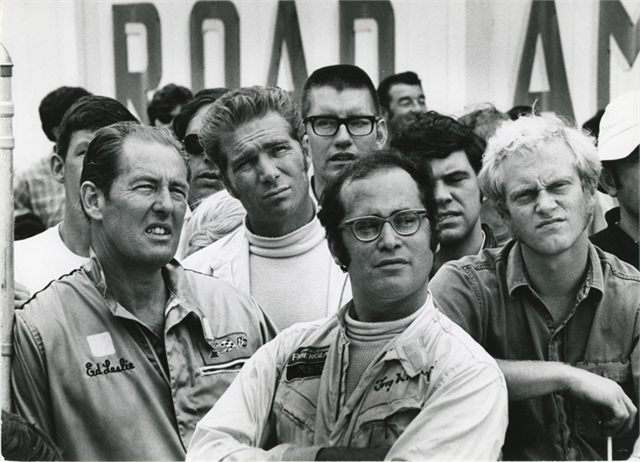
Road America’s first Trans-Am race was in 1970. The series was at its zenith that year. Thirty-six cars started in the over 2.5-liter feature race. Factory-backed teams represented almost every American manufacturer. Javelins, brought by Team Penske driven by Mark Donohue and Peter Revson, represented American Motors. Chevrolet had the Chaparral team with Camaros for Jim Hall and Ed Leslie. Ford was represented by Bud More’s team with Mustangs for Parnelli Jones and George Folmer. Dodge contracted with Ray Caldwell’s Autodynamics Inc. to race a Challenger driven by Sam Posey. Pontiac sponsored a Firebird driven by Jerry Titus, and Plymouth had a Barracuda for Swede Savage. The Trans-Am race weekend also featured an under 2.5-liter class known as the Trans-Am Two-Five Challenge with smaller performance cars from Alfa Romeo, BMW, and Fiat.
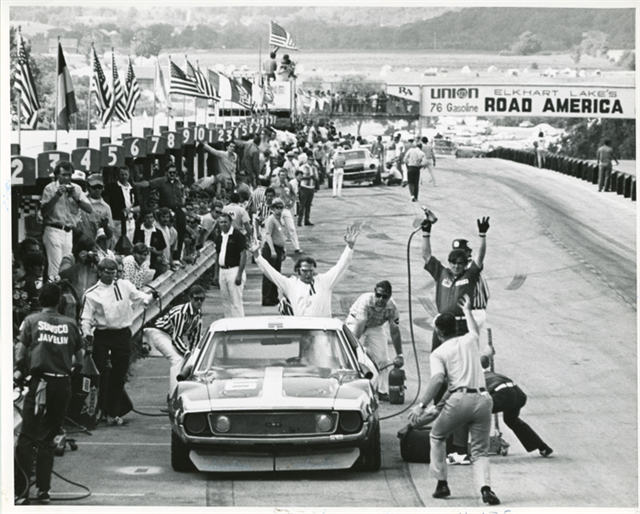
The over 2.5-liter feature race was significant in that it was the first time Mark Donohue and Team Penske strategically employed early pitstops. The Javelins started the race with a partial tank of fuel and were later flagged into the pits under the guise of an oil check. While in the pits the cars were then refueled. The strategy avoided pit congestion, resulted in faster pitstops, and completely fooled the competition. Donohue and Team Penske took the checkered flag, scoring AMC’s 2nd ever Trans-Am win.
Factory Support Ends
In 1971, the Trans-Am racing landscape radically changed with most manufacturers dropping team support. In 1970, President Nixon established the Environmental Protection Agency (EPA) and gave it the responsibility of regulating motor vehicle pollution and fuel economy. That same year Congress passed amendments to the Clean Air Act which required reduced emissions in production vehicles. Manufacturers rushed to alter engine designs to meet the standards. Unfortunately the alterations made it virtually impossible for new engines to be modified into the 5-liter, 500 hp powerplants required for Trans-Am competition, according to the Newspaper Enterprise Association. Saddled with increased engineering and production costs, most manufacturers ended their racing involvement. Chrysler and Ford announced cessation of all racing programs. American Motors was the exception, sponsoring Team Penske and its driver Mark Donohue in a new 1971 Javelin.
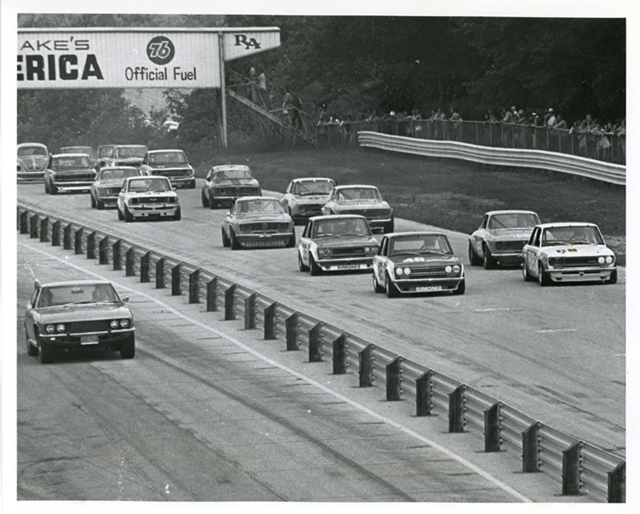
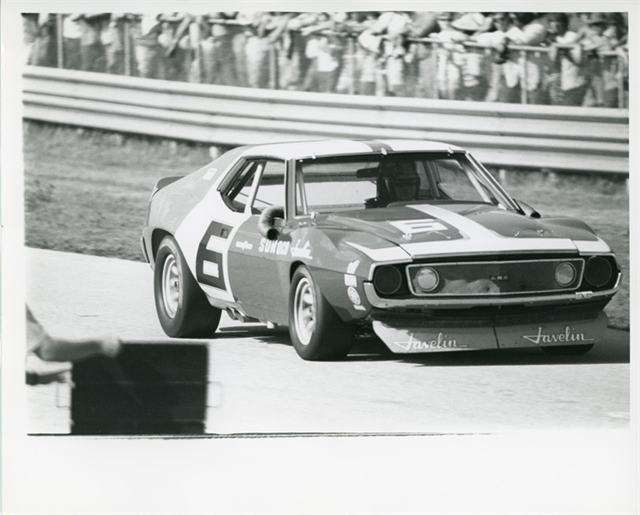
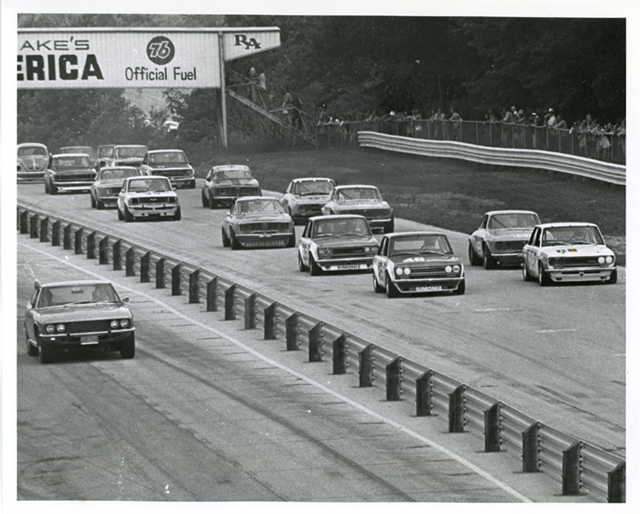
Donohue faced a field of independent drivers, mostly in Ford Mustangs. The notable exception was Vic Elford who drove Donohue’s 1970 Javelin that Penske had sold earlier that year. Both Javelins started on the front row, but Elford dropped out on lap 30 with a failed oil pump. Donohue took Road America’s checkered flag after 2 hours and 45 minutes. He went on to win seven more Trans-Am races that year and become series champion.
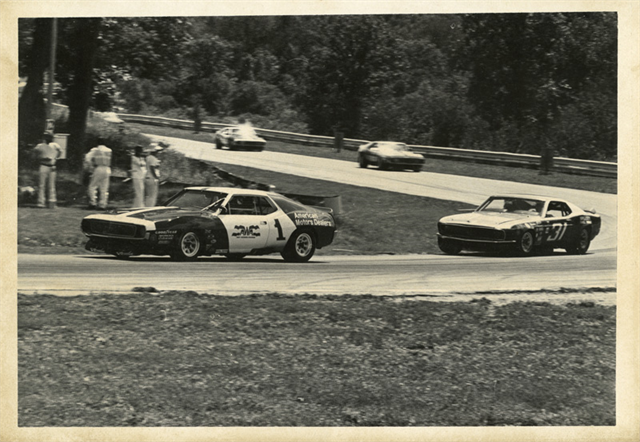
The 1972 season was the last of the golden era of the Trans-Am. At Road America, 42 pony cars started the race. George Follmer was the fastest qualifier and led for most of the race before being briefly overtaken by Warren Tope, son of a Ford Motor Company vice-president. Follmer retook the lead but developed engine problems after his last pitstop. Tope went on to take over the lead for his first Trans-Am win. Tope would go on to win another Trans-Am race, but Follmer secured the 1972 championship.
Evolution Beyond Pony Cars
The rest of the 1970s saw the Trans-Am evolve beyond its pony car origins. Changes to eligibility rules in 1973 opened the field to Corvettes and foreign cars, such as the Porsche 911 RSRs. Warren Agor’s Chevrolet Camaro was the only true pony car at the front of Road America’s Trans-Am grid. The field was otherwise dominated by Corvettes and Porsches. Still, Agor led the first few laps before George Greenwood’s Corvette took the lead and held it for the rest of the race. Pony cars were no longer at the forefront of the Trans-Am.
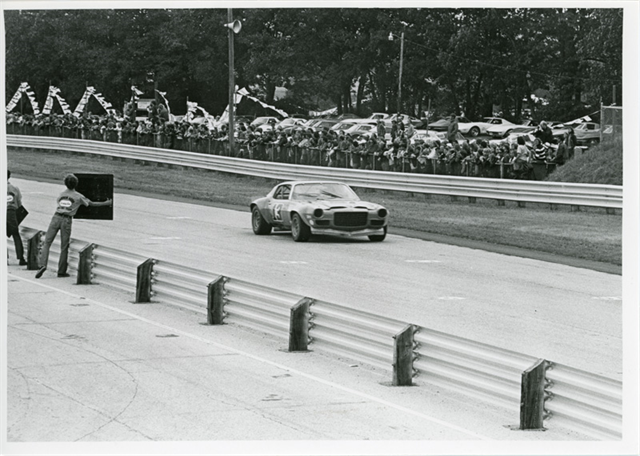
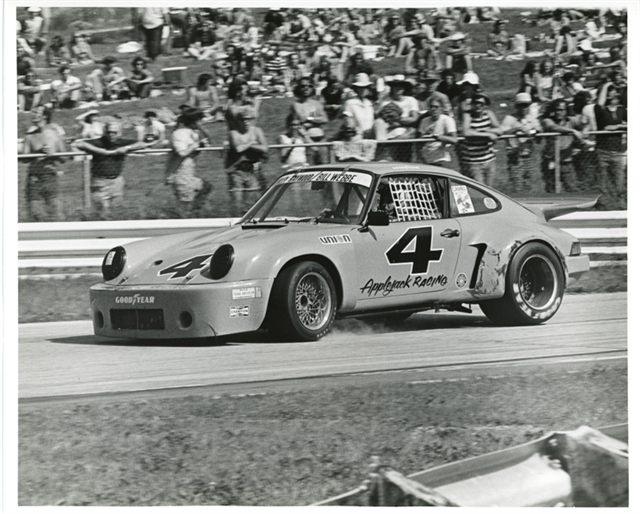
By 1974, IMSA and Trans-Am rules and regulations were so similar that many teams raced in both series. IMSA paid better and was the preferred series. The result was that there were only three Trans-Am races that year, and Road America’s was the last of the season. Porsche’s 911 Carrera RSR, popular in IMSA, filled most of Road America’s Trans-Am field, which also featured the return of Agor’s Camaro and Greenwood’s Corvette. The race was close with several lead changes. Peter Gregg’s Porsche 911 Carrera RSR crossed the line winning the race less than a second in front of Agor’s Camaro.
Move Toward Silhouette Cars
To differentiate Trans-Am from IMSA, the SCCA changed regulations in 1975 and limited competition to strictly production cars. Standards were modified in 1976 to allow Posche 934s. The change opened the field to more heavily modified cars. For example, Carl Shafer won the 1976 Road America Trans-Am driving a modified Chevrolet Camaro that had a 454 c.i. big block engine. By 1977, the modifications were much more pronounced. That year Jerry Hansen arrived at Road America with a heavily modified Chevrolet Corvette with a tube frame, bigger than production engine, additional side radiators, NACA ducts in door, and an added wing.
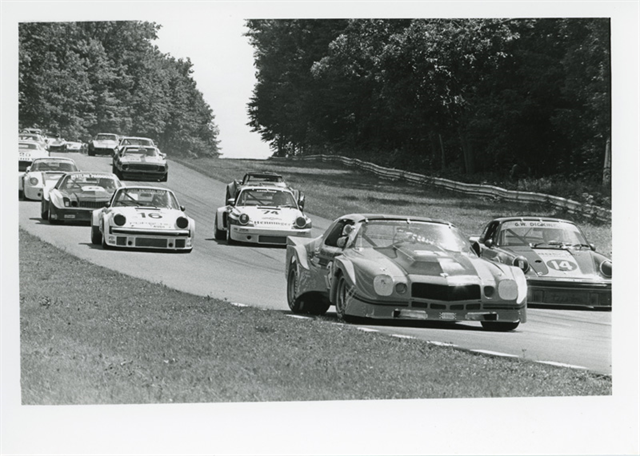
Purpose-built racers like this, with bodies that resembled production cars but underneath had purpose-built chassis and engines, became known as silhouette cars. Since the 1980s, the Trans-Am series has essentially featured silhouette race cars.
Although the cars and format have changed dramatically over the years, the spirit of the Trans-Am continues to thrill fans. Manufacturer support returned in the late 1980s and 1990s, with factory backed teams from Ford, Chevrolet, Audi, and Oldsmobile competing at Road America. The series went on hiatus in 2007 and 2008 but returned in 2009. Today, the Trans-Am series continues to entertain new generations of fans.
Sources
- Interview with Road America staff Tim Kemmis, John Ewert, Fall 2023.
- Schultz, Tom. Road America: Five Decades of Racing at Elkhart Lake. Indianapolis, IN: Beeman Jorgensen Inc., 1999
- Schultz, Tom. Celebrating 50 Years of Road Racing. Elkhart Lake, WI: Road America, 2004
- Bochroch, Albert. Trans-Am Racing 1966-1985: Detroit’s Battle for Pony Car Supremacy. Osceola, WI: Motorbooks International, 1986
- NEA. “Antipollution demands threaten racing’s boom.” Wisconsin Rapids Daily Tribune, December 8, 1970
- Pelkin, Dwight. “It’s This Way Racing Mix…” Sheboygan Press, October 23, 1968
- Milverstedt, Fred. “Road America Looks to Trans-Am.” Wisconsin State Journal, July 29, 1969